
Platform
From source documents to working-capital intelligence
Plenbrook uses proprietary document readers to structure financial records and calculate working-capital metrics with source dates and supporting references.
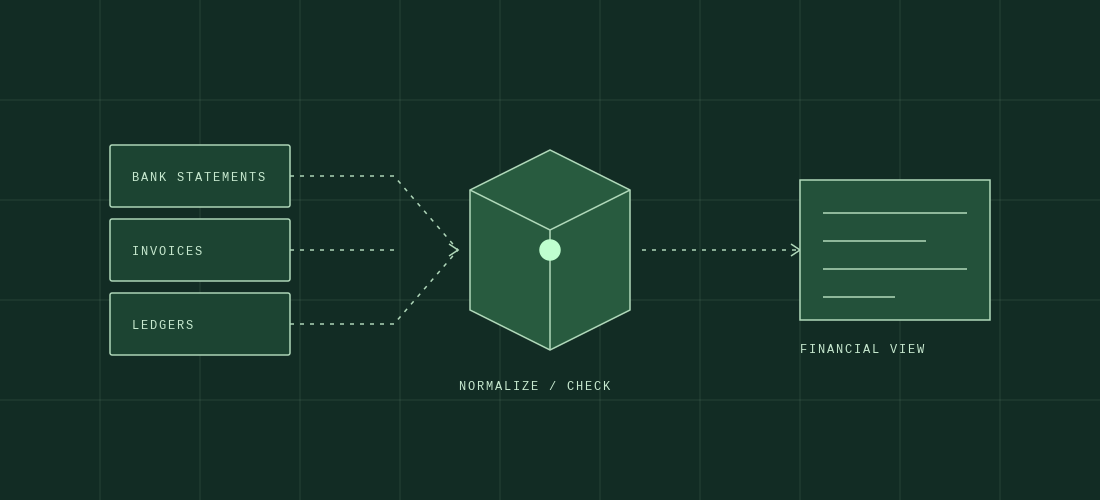
- Source recordsBank statementLedger exportStock report
- Structured dataBank movementsOpen itemsValued balances
- AnalysisDrawn balanceReceivables ageingInventory days
How the platform works
Read the document
Accept records such as bank statements, spreadsheets and accounting exports. Choose a reader for the format and use text extraction or OCR where needed. Unreadable or ambiguous records can be held for review.
Verify a structured result
A versioned document skill maps fields into typed records. The applicable checks can test totals, balance continuity, required fields and reproducibility before those records feed analysis.
Calculate from the evidence
Defined queries use structured events and snapshots. Metric results carry a data date, row references when supplied, and flags for missing inputs or partial coverage.
What finance teams can examine
-
Cash and controls
Bank reconciliation
Structure statements, check balance continuity and give reviewers the evidence to resolve exceptions.
-
Order to cash
Receivables ageing
See outstanding balances by bill age, identify overdue customers and keep the snapshot date visible.
-
Financial planning
Working-capital cycle
Read inventory, receivables and payables days together, with the periods and assumptions in view.
Questions and answers
How does Plenbrook handle an unfamiliar layout?
The pipeline can route a new format for skill development or document review. Candidate skills are evaluated before reuse, and an unsupported or low-confidence file can remain unresolved.
Can I trace a figure back to a document?
Metric results can expose references to supporting structured rows. The document and processing version are stored with those rows, giving reviewers a path back to the source.
What happens when some inputs are unavailable?
A required input can leave a value uncomputed. Short coverage or missing optional inputs can be reported with a result when the metric still has a usable basis.